AI Software Factory: The System Around Your Agents
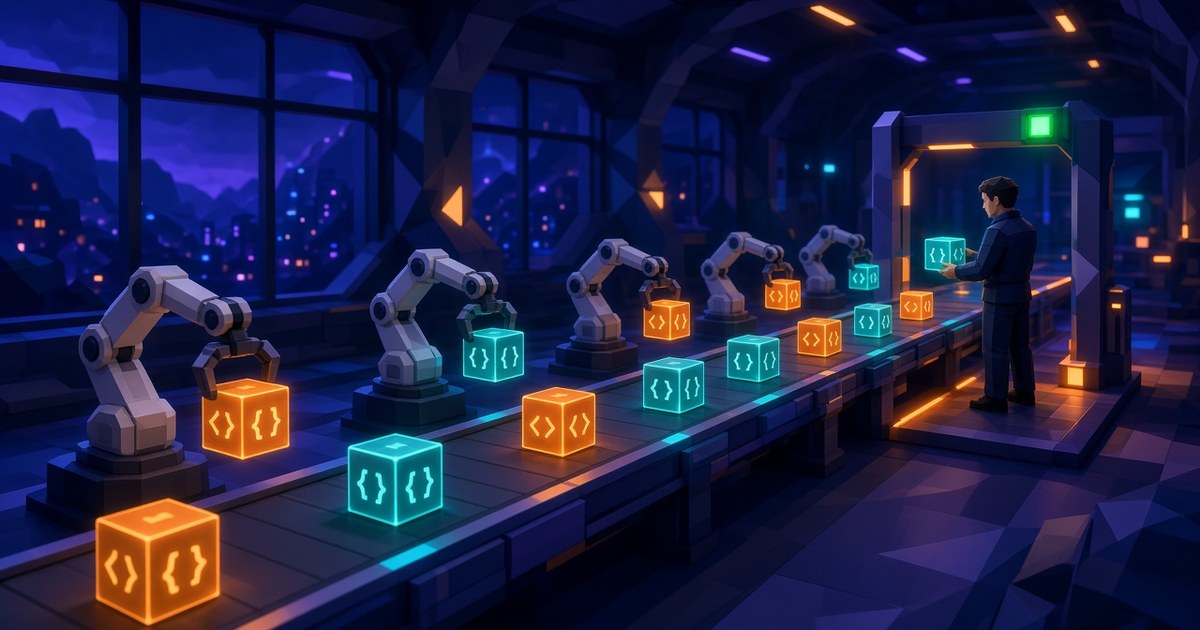
Every few months the AI coding crowd picks a new word, and this week it is "software factory." X is full of engineers saying they now "run a factory" instead of writing code. Vercel shipped eve 1.0 on November 17 and told people to build software factories with it. A Dallas firm launched one the same day. So what is an AI software factory, and is it more than a fancy name for a CI pipeline with a chatbot bolted on?
What a software factory actually is
Here is the short version. A coding agent writes code. A software factory is everything around that agent that turns a request into shipped, checked software: intake, planning, isolated runs, automated tests, review gates, deployment, and feedback from production.
Guillaume Moigneu of Upsun, who is giving a talk on this at SymfonyCon Warsaw later this month, put it well: the coding agent is just a starting point. The factory adds intent and specs on one side, verification and operations on the other.
I like this framing because it moves the hard part to where it always was. Typing code was never the slow bit. Knowing what to build, and proving the thing works, was.
A quick example
Vercel's eve announcement names a real one. Rillet built a software factory that takes customer requests, turns them into specs, tests the changes, and opens pull requests for a human to review. Vercel says Rillet tripled its shipping rate in three months. That is a vendor quoting its own customer, so add salt to taste, but the shape is clear.
Picture it on a smaller team. A bug report lands in your tracker. An agent writes a short spec. A second agent builds the fix in a sandbox. A third runs the tests and reviews the diff. You get one pull request with the evidence attached, and you decide whether it ships. You did not write a line, but you made every call that mattered.
Not all factories are the same
Cole Medin, who makes videos on agent workflows, splits them into five types. The two ends are the interesting ones:
- Dark factory. A request flows all the way to production with no human approval. In his own test, the agents did what they were told and still missed what he wanted. He keeps it for throwaway prototypes.
- Release factory. You plan a batch of 10 to 20 tickets with the agents, they work in parallel, and you review one combined change on a staging branch before anything ships. This is his preferred balance.
The name "dark factory" is borrowed from manufacturing, where some plants run with the lights off because no people are inside. Cute. Also a little terrifying when the product is your billing code.
My take
The software factory label is mostly marketing, but the idea under it is right. If agents write most of the code, the job shifts to writing good specs and building checks you trust. Linear's own data shows where that leads: in October 2026, 53% of its merged pull requests went in with an agent review and the author alone, while auth, infrastructure and deploy config still need a second human. That is a factory with sensible gates, not a dark one.
The teams that win here will not have the most agents. They will have the best tests.
So here is my question for you: if you built a software factory tomorrow, which step would you refuse to hand to an agent?